
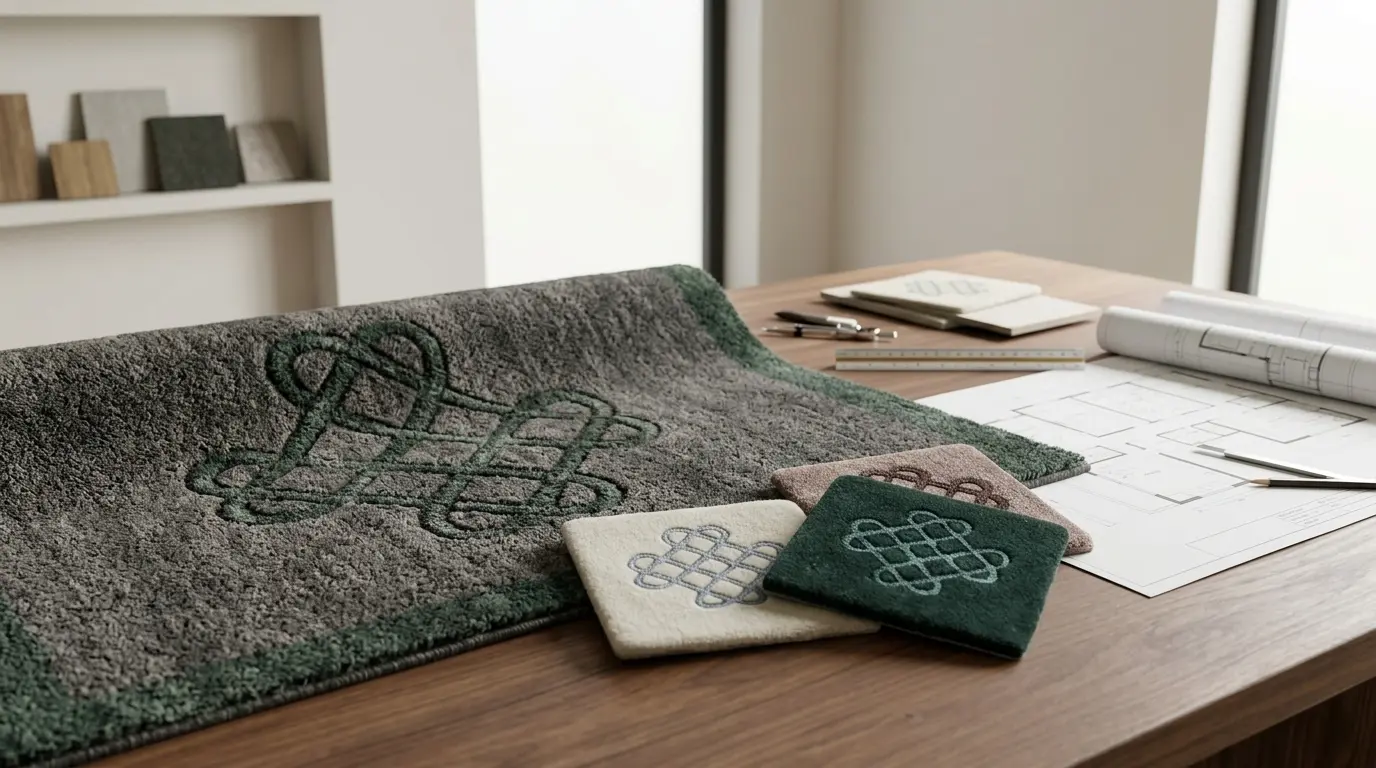
There's a particular moment in a design project where a rug stops being a finishing touch and starts being a decision - a curved staircase landing that needs an odd shape, a hospitality lobby that needs to echo the brand's colour story exactly, a residential living room where nothing off-the-shelf quite works with the palette already chosen. That's the moment a project needs a bespoke rug, not a catalogue one.
Commissioning one, though, isn't always a familiar process, even for designers who've specified everything else in the room with total confidence. So here's what it actually involves, from first brief to final install.
What "Commissioning" Means in Practice
Commissioning a rug means starting from a brief instead of a catalogue page. Rather than selecting from what's already made, you're working with a maker to build something around your project's specific requirements: the size, shape, colour, material, and design, all defined by the space rather than by what happens to be in stock.
For architects and designers, this is closer to specifying a piece of custom joinery than buying a furnishing item. The rug is designed to the room, not the other way around.
What to Specify at the Brief Stage
The more precisely a brief is defined upfront, the smoother the commissioning process runs. The details worth bringing to that first conversation:
- Exact dimensions and shape: including any non-standard geometry: curved edges, cut-outs around fixed elements, or runners for irregular hallways.
- Colour palette: ideally with reference swatches or Pantone references already tied to the rest of the scheme.
- Construction preference: hand-tufted for plush, design-forward work, or handloom for a flatter, more textural finish (worth discussing with your rug partner if you're unsure which suits the space).
- Material: wool, silk blends, or natural fibres, depending on the durability and texture the project calls for.
- Design direction: whether it's a fully custom motif, an adaptation of an existing design, or a texture-led, pattern-free piece.
- Project context: residential or hospitality, foot traffic expectations, and whether the piece needs to meet any commercial specification requirements.
A well-defined brief at this stage usually means fewer revisions later, and a more accurate timeline from day one.
How the Commissioning Process Works
Once a brief is in place, the process generally moves through the following stages:
- Design development: initial sketches or digital renders based on the brief, refined with the design team until the direction is approved.
- Material and colour sampling: physical yarn samples and dye lots sent for sign-off, ensuring the palette matches exactly before production begins.
- Production: the rug is hand-tufted or hand-loomed by our karigari in Bhadohi, built to the approved size, shape, and design.
- Quality checks and finishing: washing, trimming, and edge-finishing, followed by a final inspection against the original brief.
- Delivery and install support: packed and shipped to site, with guidance available for placement or fitting on request.
Timelines: What to Build Into Your Project Schedule
Bespoke, handmade work takes longer than sourcing from stock, and for good reason. As a general guide:
- Design and sampling: approximately 1-2 weeks, depending on how many rounds of revision the brief requires.
- Production: four to six weeks once the design and materials are approved, covering hand-tufting or handloom weaving, washing, and finishing.
- Shipping: varies by destination, worth confirming early for hospitality projects with fixed opening dates.
For projects with hard deadlines, a hotel opening date, or a show-home reveal, it's worth bringing the rug brief in early, well ahead of the final fit-out phase, rather than treating it as a last-minute furnishing item.
The Scope of Customisation Available
This is usually the part that surprises designers commissioning a rug for the first time: how much is actually adjustable. Beyond size and colour, bespoke commissioning can flex on:
- Pile height and texture, for a flatter commercial finish or a deeper, plusher residential feel
- Custom motifs or branding, useful for hospitality projects working a logo or signature pattern into the design
- Border and edge treatments, including binding options suited to high-traffic commercial installs
- Multiples with consistent quality, for projects requiring several identical or coordinated pieces across multiple rooms
Because every piece is made by hand rather than machine-run from a template, the scope for adjustment is wider than most designers expect going in.
Working With a Trade Partner on a Bespoke Commission
The projects that go smoothest are the ones where the rug maker is treated as part of the design process, not a vendor brought in at the end. Sharing renders, material boards, and even site photos early lets us flag anything that might affect the design, the timeline, or the finish well before production starts, when changes are simple, rather than after, when they aren't.
That collaboration is really what commissioning a bespoke rug comes down to: a brief, a maker, and a piece built specifically for the space it's going into, nothing pulled off a shelf, nothing approximate.
Have a project that needs a bespoke hand-tufted or handloom rug? Get in touch with our trade team with your brief, and we will help shape it from first sketch to final install.